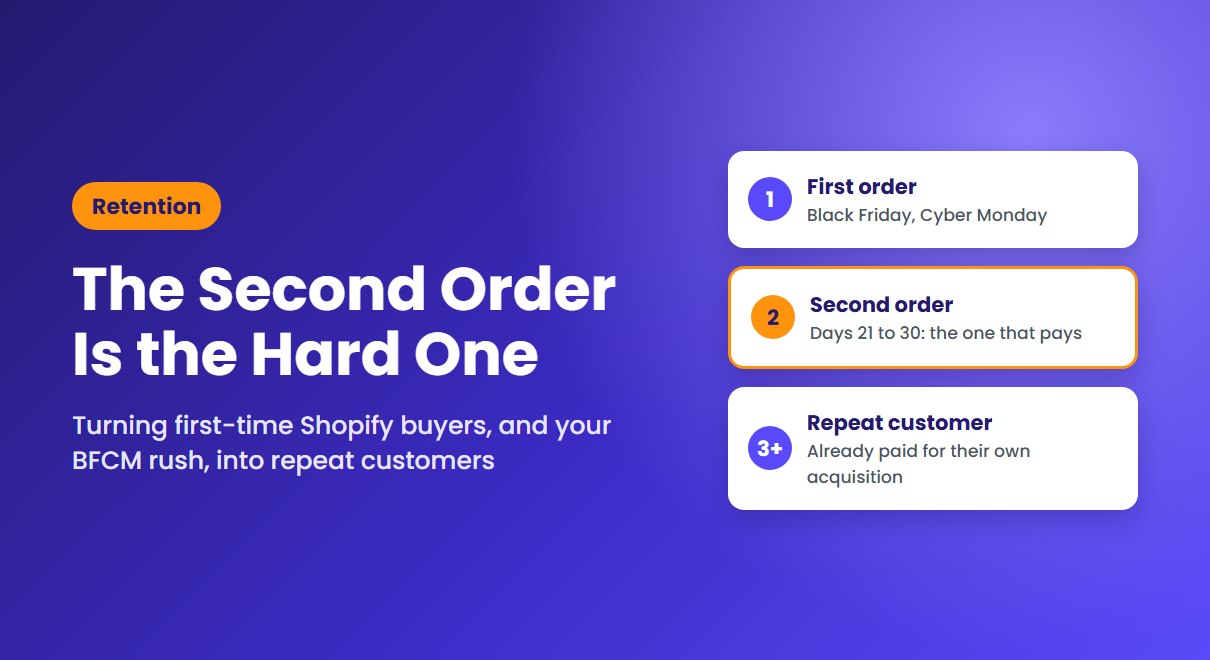
Black Friday is tomorrow, and for most Shopify stores the next five days will bring more first-time customers than any other week of the year. Most of them will never come back.
That's not a guess. Ometria, a retail marketing platform, looked at customers its retailers acquired on Black Friday 2024. Only 4% made a second purchase within 12 months, and they were six times less likely to return than typical new customers.
The first order is where your BFCM ad budget goes. The second order is where the profit is. Here is how to plan for it before the orders start arriving.
Why the second order matters
Shopify tracks this as your returning customer rate: the share of customers who placed an order and had bought before. Shopify says most stores sit between 20% and 40%. Klaviyo puts a good repeat purchase rate at about 20% to 30%.
The case for chasing that number is old but still quoted for a reason. Research by Frederick Reichheld of Bain & Company, summarised in Harvard Business Review, found that a 5% rise in customer retention can lift profits by 25% to 95%. A customer who comes back has already paid for their own acquisition.
The window closes fast
The best time to earn a second order is while the first one is still in transit. Omnisend's 2026 benchmarks, from 470 million automated emails sent in 2025, show it clearly:
- Order confirmation emails were opened 57.91% of the time.
- Shipping confirmation emails were opened 62.67% of the time, with a 16.01% click rate.
- Win-back emails, sent to customers who had gone quiet, were opened 33.11% of the time and converted at just 0.54%.
Customers read almost everything you send right after they buy. Wait until they've drifted away, and you're writing to people who have stopped listening.

A 60-day second-order plan
Treat the weeks after the first order as a short sequence, not a newsletter list.
- Order confirmation (day 0). Thank them, confirm what they bought and when it will arrive. Leave the sales pitch out.
- Shipping update. Add tracking and one useful thing: how to use, care for or size the product. A single "pairs well with" suggestion fits here.
- Check-in (about 5 days after delivery). Ask how it's going and how to get help. If something went wrong, this is your chance to fix it before it becomes a refund or a bad review.
- The second-order email (days 21 to 30). Recommend something that follows from the first purchase: a refill, an accessory, the next size up. For consumables, time it to when the first product runs out.
- Last nudge (days 45 to 60). One more reason to come back. After this, they move into your normal win-back flow.
Use your own product data to set the timing. A coffee subscription and a winter coat have very different second-order windows.
BFCM buyers need a different plan
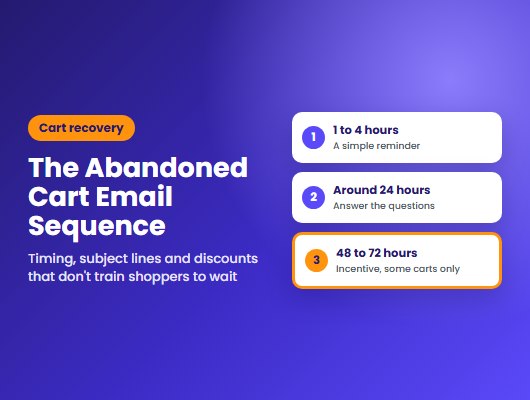
Black Friday customers came for a price. If every follow-up email has a bigger discount in it, you teach them to wait for the next sale. We covered the same trap in abandoned cart emails.
Give them other reasons to return:
- Ask if it was a gift. Much of what sells in late November is for someone else. The buyer and the user are different people, so a "how are you finding it?" email can miss. Tag gift orders and send them gift-season content instead.
- Offer early access, not deeper discounts. First access to a January restock or a new range rewards them without cutting your price. If there is a deadline, make it a real one.
- Get the basics right. A late delivery or a hard return during the holidays ends the relationship before your emails can start it. Make sure your delivery promises and returns page hold up under BFCM volume.
If you must use a discount, make it single-use, tied to the next order, and with a short expiry.
Don't let deliverability undo the work
BFCM volume pushes complaint rates up, and a customer whose emails land in spam can't come back from your flows. Our guide to why emails go to spam covers the sender rules. If you also message customers on WhatsApp, our WhatsApp pricing guide explains what's still free and what now costs money.
What to measure in January
Track two numbers:
- Your BFCM cohort's second-order rate. Of customers whose first order came between Black Friday and Cyber Monday, what share ordered again within 60 and 90 days?
- The same rate for first-time customers from October. If BFCM buyers come back far less often, your post-purchase plan needs work before next year.
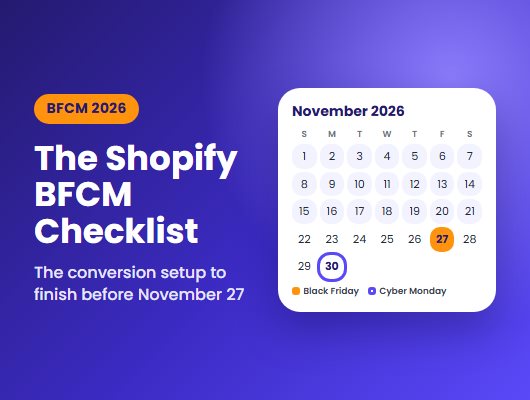
Our BFCM 2026 checklist covers the run-up to the sale. This is the part that decides whether the sale paid off. And if returning customers leave a cart on their way back, Cartly sends the recovery emails and push notifications to bring them to checkout.
Frequently asked questions
What is a good returning customer rate on Shopify?
Shopify says most stores show 20% to 40%. Where you land depends on what you sell and how often customers need it again.
When should I send the second-order email?
Usually 21 to 30 days after the first order, or when a consumable product is likely to run out. Earlier emails should focus on delivery and getting value from the first purchase.
Should I send BFCM customers a discount to come back?
Not by default. They already bought on price, and more discounts teach them to wait. Try early access, useful content and a strong delivery experience first, and keep any code single-use with a short expiry.