Ask what a "normal" cart abandonment rate is and you'll get two well-cited answers. Baymard Institute puts it at 70.22%, the average of 50 published studies. Dynamic Yield's benchmark, built from its own customers' stores over the past twelve months, says 77.38%.
Both are right. They measure different things, in different stores. For a Shopify merchant, the more useful question isn't whether your number is "good". It's how much of your abandonment you can actually win back, and which kind.
Cart abandonment benchmarks for 2026
| Source | Rate | What it's based on |
|---|---|---|
| Baymard Institute | 70.22% | Average of 50 published studies |
| Dynamic Yield | 77.38% | Its customers' sites, trailing 12 months |
Pick one benchmark and stick with it. Comparing your store with Baymard one month and Dynamic Yield the next will make a seven-point swing appear out of nowhere.
Cart abandonment by device
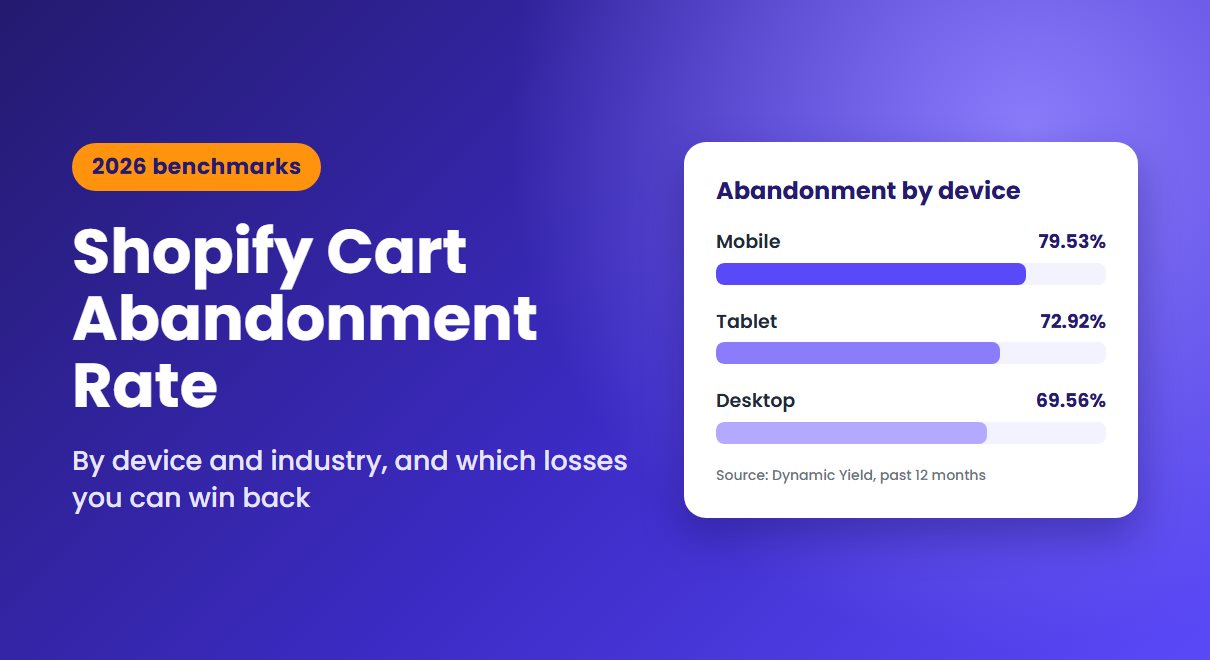
Dynamic Yield's device split shows the pattern most merchants already suspect:

Mobile abandonment runs about ten points higher than desktop. Part of that is real friction: small forms and fiddly payment fields. But many shoppers also use their phone to build a shortlist and buy later, often on another device. A mobile cart is frequently a bookmark, not a failure.
That changes the fix. A better mobile checkout helps, but it won't convert someone who planned to buy tonight on a laptop. What converts them is a way to reach them later, which means capturing an email address before they leave.
Cart abandonment by industry
The industry spread is wider than any single average suggests. Over the same twelve months, Dynamic Yield recorded its highest rate in beauty and personal care (79.94%) and its lowest in pet care and veterinary services (50.4%).
A likely explanation is how people shop each category. Beauty invites browsing, comparison and wish-listing. Pet supplies are often a repeat purchase of something the owner already knows they need. If you sell considered or discretionary products, a rate in the high 70s may be normal. Your own trend line, month over month, tells you more than any cross-industry figure.
How to measure your own rate in Shopify
In Shopify admin, open Analytics → Reports and find the Conversion rate breakdown report. Switch the funnel to closed, so it only counts sessions that went through each step in order. Then:
Cart abandonment rate = 1 − (sessions that completed checkout ÷ sessions with cart additions)
For example, 1,200 sessions with cart additions and 300 completed checkouts gives 1 − 0.25, or a 75% abandonment rate.
Don't confuse this with Shopify's Abandoned checkouts list. That only includes shoppers who reached checkout and entered an email address, so it shows a fraction of the carts you're losing.
Which abandoned carts are actually recoverable?
Baymard found that 42% of US online shoppers have abandoned a cart because they were "just browsing" or not ready to buy. No checkout redesign will convert those people today. The rest of abandonment splits into problems you can fix on the page, and moments you can catch with a follow-up.

1. Checkout friction: fix it on the page
Among shoppers who abandoned during checkout for reasons other than browsing, Baymard lists extra costs (40%), slow delivery (20%), not trusting the site with card details (19%) and forced account creation (18%) as leading causes. Baymard estimates the average large ecommerce site could raise its conversion rate by 35.26% through better checkout design alone.
2. Distracted shoppers: catch them during the session
Some shoppers haven't left. They've opened another tab to compare prices or answer a message. A tab reminder such as FaviCart can pull them back while your store is still open in their browser.
3. Not ready yet: follow up after they leave
These shoppers can only be reached if you know who they are, and recovery messages are worth the effort. Klaviyo's 2026 benchmarks, drawn from over 110,000 customers, show abandoned cart flows earn more revenue per recipient than any other automated flow: $6.77 per email recipient on average, and $13.70 for the top 10% of brands.
The catch is getting the email in the first place. Cartly captures it when a product is added to the cart, rather than waiting for checkout, and then follows up by email and web push. Our guide to recovering abandoned carts on Shopify walks through a full sequence.
Where to start
Measure your rate this month using the closed funnel, and write it down. Fix the most common friction first, which for most stores means showing shipping costs before checkout. Then make sure every shopper who adds to cart can be reached again.
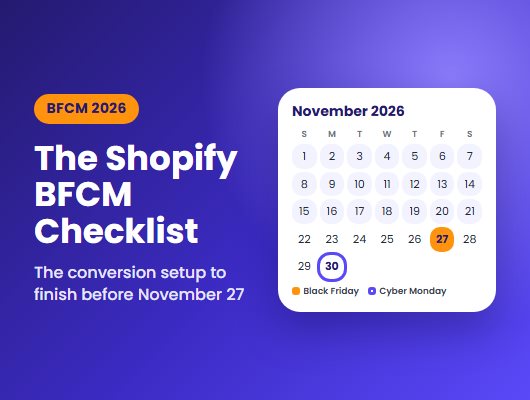
With Black Friday on November 27, all three are worth finishing soon. Our BFCM 2026 checklist sets out when.